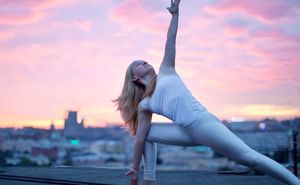

Yoga is a popular exercise that combines breathing, movement, and meditation. Imported to the United States from India over a century ago, yoga has long been praised for its physical and spiritual benefits.
Research shows yoga can help manage stress, ease depression and anxiety, improve mood, and enhance the quality of sleep. In addition, yoga has been shown to increase flexibility, improve balance and coordination, reduce pain, and increase strength.
Taking your first yoga class may seem overwhelming, but it doesn’t have to be intimidating if you know what to expect. A typical yoga class is 45 minutes to 90 minutes and begins with breathing exercises as a warm-up, moves onto poses for the bulk of the class, and ends with mediation as a cool down.
The best way to learn yoga is by doing it, but if you're nervous about attending a class, don't shy away from doing a little studying before you attend. Consider the following.
Classes come in a variety of yoga styles, so it is a good idea to read the class descriptions at your local yoga studios to find a class that is right for you. Common types include:
According to research published in the Journal of Complementary and Alternative Medicine, Kundalini yoga techniques can be helpful for managing the obsessive-compulsive disorder, phobias, addiction and substance abuse disorders, major depressive disorders, dyslexia, grief, insomnia, and other sleep disorders.
The Most Popular Types of Yoga
Yoga places a strong focus on breathing, which research shows can really pay off when it comes to your health.
"Yoga is about the breath," says Jenay Rose, a 500-hour Registered Yoga Teacher, online fitness coach, and social media influencer. "The hardest part is showing up, so if you can just master breathing, you're practicing.”
According to a 2014 study published in Medical Science Monitor Basic Research, a single, 25-minute guided protocol of alternate nostril yoga breathing significantly decreased blood pressure and breathing rate in hypertensive and healthy volunteers.
Depending on the studio and instructor, pose names might be referenced in Sanskrit or English, or a combination thereof. This can be confusing the first few times you attend class.
Review some of the most common poses to familiarize yourself with English and Hindi names, as well as their basic form.
Favorites like child's pose (balasana) and downward facing dog (adho mukha svanasana) are incorporated into just about every yoga class. Other common poses and sequences include the warrior poses and sun salutations.
Essential Yoga Poses for Beginners
Most studios encourage students to bring their own yoga mats to class, but if you don't have a mat of your own, they're often available to rent for a small fee. Check with your local studio to see what their protocol is. Otherwise, you're unlikely to need much of anything.
Studios and gyms typically provide all the equipment and props you'll need, including bolsters, blocks, and blankets.
If you plan to try yoga at home, you may want to buy a few basics or find substitutes around your house before you start. For instance, you can use a belt or scarf in place of a yoga strap and throw pillows or a sturdy hard-cover book for yoga blocks.
Essential and Optional Yoga Equipment for Beginners
Choose comfortable, stretchy pants or shorts and a close-fitting top that won't fly up over your head every time you perform an inversion.
You won't need special shoes because yoga is done barefoot. You can also wear a pair of yoga socks with grips on the bottom to keep your feet from sliding around on your mat.
Yoga studios are traditionally where aspiring students go to learn the practice. But they're not the only available option for instruction. , and There are pros and cons to each option.
While there's nothing wrong with starting an at-home practice, this type of instruction lacks personalized feedback, so it's hard for beginners to know if they're getting poses exactly right. Whenever possible, it's best to attend at least a few classes with a qualified instructor before deciding to go it alone.
Pros and Cons to Yoga Classes at a Gym vs. the Studio
Yoga etiquette, for the most part, is fairly self-explanatory—respect the teacher, respect your fellow students, and respect yourself and the practice.
Little things, like showing up on time, turning your phone's ringer off before class, and staying in class through the end of the final relaxation, make a big difference.
Yoga Etiquette and the Basics of a Yoga Class
Most yoga classes follow a similar script, although the details change based on the type of yoga you're doing and the level of instruction. From the moment you step foot in the studio to the end of your first class, this is what you can expect.
After class wraps up, take some time to think about the experience. Assess what you liked or didn't like, and think about whether the speed and instruction were appropriate for your ability level. Armed with this information, you can decide whether to continue attending the same class in the future or to switch it up and try something different.
Yoga is a very personal practice. What's safe and effective for one person may not be safe or effective for another. While most yoga poses are completely safe, it's important to listen to your body and set your own limits as you go.
For instance, if you have low back issues, you may need to ask your teacher for modifications to basic poses like the standing forward fold or plow pose. And if you're starting a home-based yoga practice, it's particularly important to brush up on poses that are riskiest for beginners so you don't try something you're not ready for.
Just because poses like handstands and crows are popular to show off on Instagram, that doesn't mean you're ready to try them. Many yoga poses require substantial strength and balance that takes time to develop. Start by developing a basic practice and give yourself time to work up from there.
If you struggle through longer practices, don't be embarrassed. Many new yogis are surprised by how challenging yoga can be.
Take breaks in child's pose whenever you need to, and if you'd like, practice beginner yoga poses designed to help build strength when you have a few minutes on your own. Before you know it, you'll be able to make it through a whole class like a champ.
There are a lot of myths surrounding the practice of yoga. But that's just it—they're myths, not reality. Believe it or not, yoga isn't just for girls. You don't have to be flexible to do yoga.
Yoga isn't a religion. Yoga isn't "too hard" or "too easy." Yoga isn't just for vegetarian hippies. Yoga is for everyone at every level, and yoga can fit into every lifestyle.
If you're open to trying the practice, you just might discover how inclusive and uplifting yoga can be.
verywellfit.com